

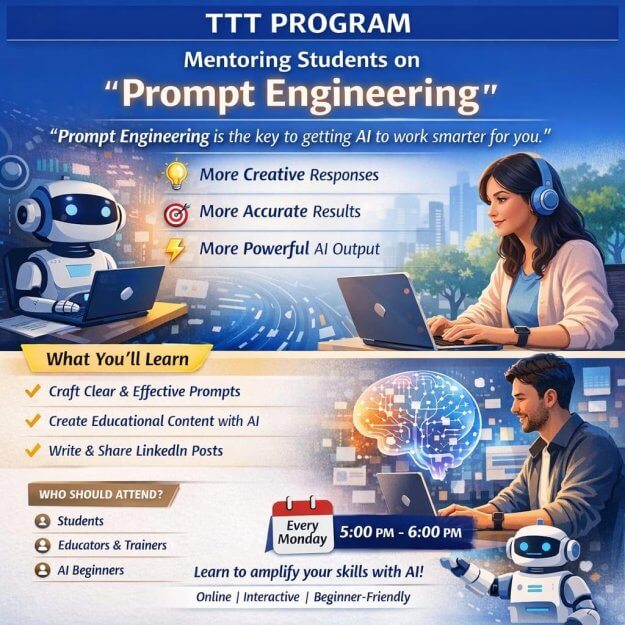
Prompt Engineering for Educators: TTT Mentoring Sessions Series
R.O.S.A. has launched a Mentoring Sessions Series as a direct continuation and follow-up to the ReCoding Africa – Training Teachers for Tomorrow (TTT) program. The series began on Monday, February 2, 2026, and will continue through the end of February, supporting educators ad they build on the skills gained during the original in-person training.
The sessions are designed specifically for the 40 teachers and educators who participated in the TTT program delivered in Zanzibar in November 2025, implemented by R.O.S.A. in partnership with the Ministry of Education and Vocational Training of Zanzibar and the Cisco Foundation.

About the Mentoring Sessions Series
This series provides structured follow-up support to reinforce key digital and teaching skills introduced during the ReCoding Africa TTT program. Through expert-led sessions, educators deepen their understanding of digital tools, strengthen practical application, and continue peer learning withing the same cohort.
One of the sessions in this series focuses on Prompt Engineering, a foundational skills for using artificial intelligence tools effectively in education.

Featured Mentor: Jane Mugi
Jane Mugi is a digital skills educator and AI advocate supporting R.O.S.A.’s Mentoring Sessions Series under the Training Teachers for Tomorrow (TTT) program. She brings hands‑on experience in digital literacy and beginner‑friendly AI education, helping educators and students confidently use AI tools in real‑world learning environments. Through her work in digital literacy and AI education, Jane focuses on making complex concepts accessible, practical, and relevant—especially for beginners.
In this TTT mentoring session, Jane guides participants through the fundamentals of Prompt Engineering, a critical skill for anyone looking to use AI tools more creatively, accurately, and ethically.

What Trainees Learn
Trainees leave with the knowledge of:
- Bad vs. good prompts and how wording affects AI responses
- Why prompts matter in education, including accuracy, clarity, and relevance
- AI as a collaborative tool for brainstorming, problem-solving, and content creation
By learning how to define context, audience, and intent when interacting with AI, trainees strengthen their ability to support teaching, learning, and responsible technology use across local education settings.
And education-focused examples such as:
- Explaining complex topics in simple language
- Supporting online safety and fact-checking
- Creating educational and professional content (e.g., LinkedIn posts)
- Encouraging ethical and responsible AI use

What Comes Next?
The Mentoring Sessions series continues throughout February as part of R.O.S.A.’s ongoing support for educators. To learn more about these programs, make sure to check out the ReCoding Africa and TTT – Training Teachers for Tomorrow Programs.